



The childhood health journey has historically been measured by growth charts, dental checkups, and immunization schedules. However, in 2026, a new milestone has taken center stage in the world of family medicine: the comprehensive eye exam. As digital integration becomes permanent in our schools and homes, primary care providers are sounding the alarm on the “myopia epidemic.” This rapid surge in nearsightedness among children has moved from a simple vision inconvenience to a top-tier clinical priority for every family doctor.
For today’s parents, the traditional school “vision screening” is no longer enough. While these screenings are helpful for catching gross vision loss, they are not diagnostic. In fact, modern data suggests these basic tests miss up to 60% of developmental vision issues. This is why the 2026 medical standard has shifted toward the “Age 5 Exam” as a critical developmental window. By catching eye changes before a child begins the heavy visual demands of grade school, we can implement management strategies that don’t just correct vision—they protect the long-term structural integrity of the eye.
The Myopia Epidemic: More Than Just Blurry Vision
In the landscape of 2026, nearsightedness (myopia) is about much more than a child needing glasses to see the chalkboard. Clinically, myopia is a progressive condition where the eyeball elongates too quickly during the formative years. This physical stretching of the eye is where the true danger lies. As the eye grows longer than it should, it thins the delicate tissues of the retina and the macula.
The “gritty” reality is that our modern lifestyle is physically reshaping our children’s eyes. Increased “near-work” on tablets and less time spent in natural, ambient sunlight are the primary environmental triggers. When a child is diagnosed with myopia at age six or seven, they are on a trajectory toward “high myopia.” If left unmanaged, this significantly increases the lifetime risk of serious, sight-threatening complications such as retinal detachment, glaucoma, and myopic macular degeneration. A family doctor now views a myopia diagnosis not just as a need for an optical prescription, but as a risk factor for future ocular disease.
The “Age 5” Benchmark: Why Timing is Everything
Why is the age of five the “Golden Window” in 2026 family medicine protocols? This is the stage where a child’s visual system undergoes its most massive transition. As they enter a structured classroom environment, their eyes must suddenly coordinate for hours of high-intensity tasks: reading small print, writing, and interacting with digital whiteboards.
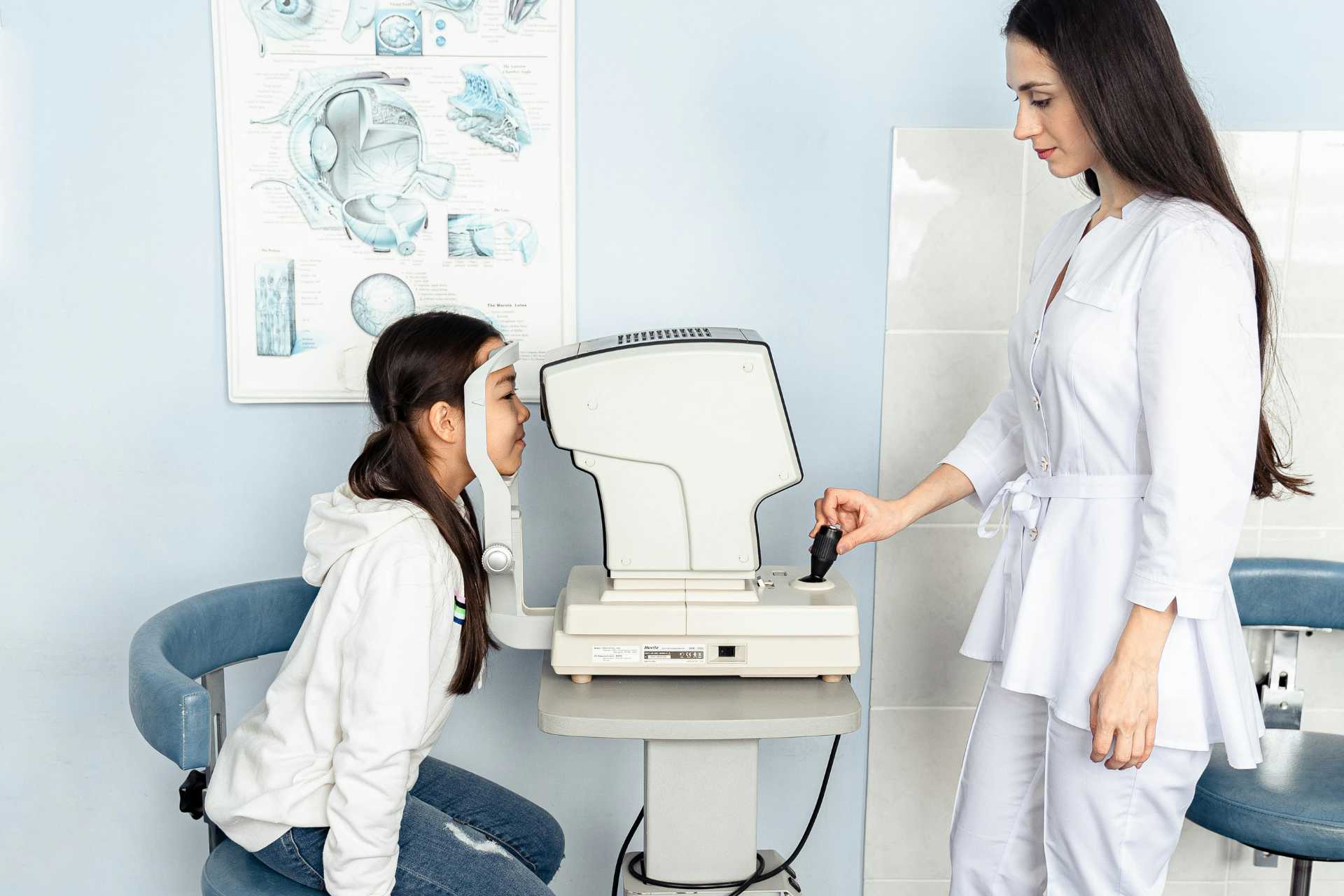
A comprehensive eye exam at this stage allows an optometrist to look far beyond basic clarity. They assess how the eyes work together as a team (binocular vision) and check for “accommodative lag”—a primary indicator that a child’s eyes are struggling to maintain focus on close-up objects. When these issues are caught at age five, the family doctor and eye specialist can intervene before the child begins to struggle. Often, what looks like a learning disability or a lack of focus in the classroom is actually a child who is visually exhausted by the time they reach their second hour of schoolwork.
Modern Myopia Management: The 2026 Toolkit
Once myopia is detected in a young patient, the “wait and see” approach used by previous generations is considered obsolete. In 2026, we have a sophisticated toolkit designed to slow down the progression of nearsightedness. These interventions are most effective when started early, while the eye is still highly “plastic” and growing:
- Low-Dose Atropine Drops: These daily eye drops are a breakthrough in pediatric care. By using a very low concentration of atropine, doctors can significantly slow the elongation of the eyeball with virtually no side effects. This keeps the myopia from reaching dangerous levels.
- Peripheral Defocus Lenses: Traditional glasses only fix the center of vision, but they can actually encourage the eye to grow longer in the periphery. Modern “DIMS” (Defocus Incorporated Multiple Segments) lenses provide clear vision in the center while subtly blurring the peripheral view. This sends a biological signal to the brain to stop the eye from growing longer.
- Orthokeratology (Ortho-K): These are specialized contact lenses worn only at night. They gently reshape the cornea while the child sleeps. In the morning, the child removes the lenses and enjoys clear vision throughout the day without needing glasses. More importantly, this reshaping helps suppress the growth of the eye.
- The 20-20-2 Rule: This is the new “lifestyle prescription” given by every 2026 family doctor. For every 20 minutes of screen time, a child must look 20 feet away for 20 seconds, and they must spend at least 2 hours in outdoor light every day. Outdoor light triggers dopamine release in the retina, which naturally regulates the eye’s growth.
The Collaborative Care Model: Your Family Doctor as the Quarterback
In 2026, your family doctor acts as the “quarterback” for your child’s total health, and vision is a key player on that team. During regular well-child visits, the physician performs initial screenings and, more importantly, reviews family history. We now know that if both parents are nearsighted, the child has a much higher genetic predisposition to develop myopia.
This integrated approach ensures that vision is treated as a component of overall development rather than an isolated optical issue. When an optometrist identifies a concern, they share those findings with the family medicine team. This allows for a holistic view of the child’s health. If a child is experiencing headaches, fatigue, or a sudden drop in school performance, the family doctor can cross-reference the eye exam results to see if visual strain is the underlying cause. This collaboration prevents the misdiagnosis of behavioural issues and ensures the child receives the right support at the right time.
A Clear Path for Your Child’s Future
Your child’s eyes are their most important tool for learning, playing, and interacting with the world. In 2026, we no longer have to accept worsening vision as an inevitable part of growing up in a digital age. By prioritizing early myopia management, we are doing more than just helping a child see the board clearly; we are safeguarding their eye health for the next eighty years.
Do not wait for your child to complain that things look “blurry.” Children often assume that the way they see is the way everyone sees. They rarely have a baseline for “perfect” vision. Take the proactive step of scheduling a comprehensive eye exam before the next school year begins. Consult with your family doctor about your child’s visual milestones and ensure they have the clear path they deserve. Investing in their vision today is one of the most impactful ways to support their success, confidence, and health for a lifetime.